Leave Your Message
AI Helps Write

Top 10 Food Dehydrator Machine Suppliers for Global Buyers

Choosing a Food Dehydrator Machine supplier involves more than comparing purchase prices. Global buyers need equipment that suits their products, production volume, and operating conditions. A small fruit processor may need a compact cabinet with adjustable trays, while a larger facility may prioritize continuous operation, consistent airflow, and easier cleaning. Scale changes everything.

This guide introduces ten suppliers for buyers to consider. It looks at practical factors such as machine capacity, temperature control, construction materials, customization options, technical support, and export experience. Ask suppliers for clear specifications, service details, and references where available. Details matter: tray spacing can affect product loading, and uneven airflow may leave thicker slices damp while thinner pieces become brittle. A polished catalog cannot answer every question.

No machine fits every line. A supplier’s claims should be checked against your food type, target output, installation space, and local operating requirements. Buyers should also confirm warranty terms, spare-part availability, and how maintenance is handled after delivery. One point is easy to overlook: the cheapest offer may not include the support needed when a fan or control panel fails. The right choice is rarely obvious from a product page alone. These profiles offer a starting point, not a universal ranking; careful comparison and direct questions remain essential.
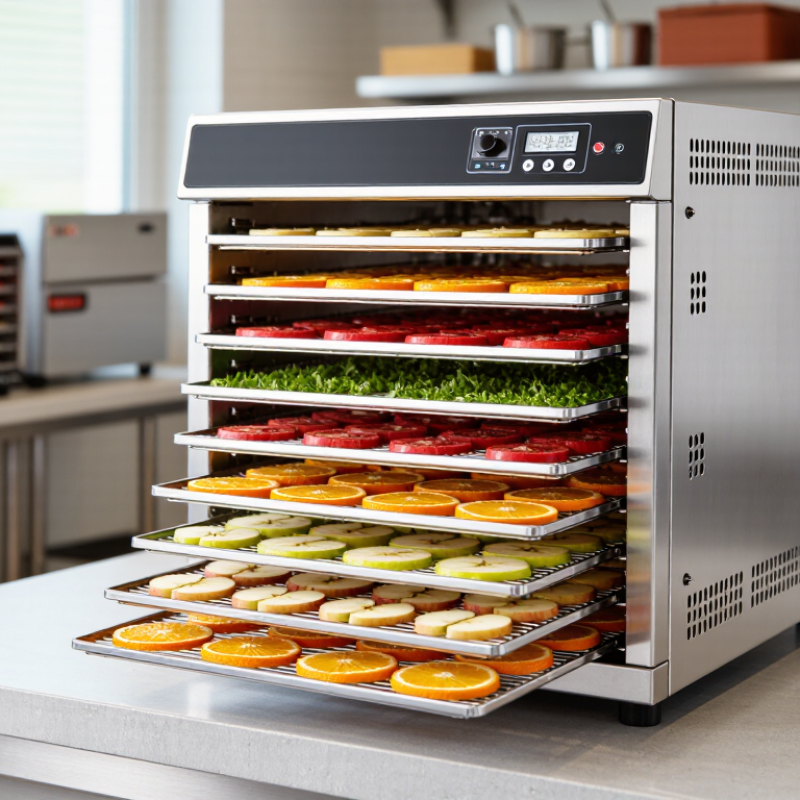
Top 10 Food Dehydrator Machine Suppliers for Global Buyers

Food Dehydrator Machines and Their Global Supplier Market

Top 10 Food Dehydrator Machine Suppliers for Global Buyers
Food Dehydrator Machines and Their Global Supplier Market

Food dehydrators serve farms, processors, food-service kitchens, and small manufacturers. Global buyers compare capacity, drying consistency, energy use, and cleaning access—not just purchase price. FAO’s 2023 report, The State of Food and Agriculture, estimates that 13.2% of food was lost between harvest and retail in 2021. Dehydration can help preserve suitable produce, but it cannot prevent every kind of loss. That distinction matters.

Supplier markets vary by region. Some manufacturers focus on compact tray units; others build continuous belt systems for larger output. Ask for test data using your actual product, slice thickness, and target moisture level. Check the stated capacity carefully: fresh input weight and finished dried output are not the same. Request details on temperature control, airflow, spare parts, and operator training. A glossy specification sheet can leave gaps. I would want those gaps clarified before comparing quotations.

Tips: Request a sample-run report and measure drying time, final moisture, and batch uniformity. Compare energy use per kilogram of dried product, not only rated power. UNEP’s Food Waste Index Report 2024 estimates that 1.05 billion tonnes of food were wasted in 2022 across households, food service, and retail. That figure signals a real preservation challenge, though a dehydrator’s value still depends on local crops, energy costs, and dependable after-sales support.
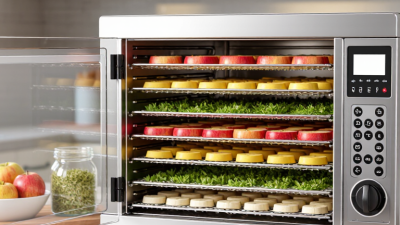
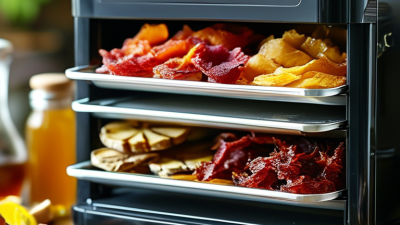
Top 10 Food Dehydrator Machine Suppliers for Global Buyers - Food Dehydrator Machines and Their Global Supplier Market

Typical drying temperatures by food category offer a practical, supplier-neutral comparison for buyers evaluating dehydrator capabilities.

Values are representative settings drawn from common food-drying guidance; exact settings vary by food and appliance. For jerky, follow USDA food-safety guidance to heat meat to 160°F (71°C) before or after drying. Sources: National Center for Home Food Preservation; USDA FSIS.

Criteria for Evaluating Food Dehydrator Machine Suppliers

A reliable food dehydrator supplier should explain how its machines perform beyond the headline capacity. Ask for usable tray area, batch weight, temperature range, and expected drying time for your products. Compare these figures under similar conditions; a large chamber does not guarantee even results. Numbers need context.

Airflow and temperature stability affect texture, color, and moisture removal. Request test data for foods similar to yours, such as sliced apples or leafy herbs, and ask how results were measured. If possible, run a sample batch using your own cut sizes and loading pattern. A showroom demonstration may look convincing, but it may not reflect a full production day. That matters.

Inspect the details that shape daily use: food-contact materials, door seals, control accuracy, cleaning access, and tray durability. Ask how the supplier handles installation, operator training, spare parts, and service response times. Clear answers are useful; vague promises deserve follow-up. I would not judge support by a brochure alone. Request written warranty terms and a parts list, then check whether the proposed capacity matches your power supply, room layout, and planned workload. Even careful estimates can miss something, so leave room to reassess after a real production trial.

Profiles of Ten Suppliers Serving Global Buyers

Profiles of ten suppliers serving global buyers should compare engineering capability, not just brochure claims. FAO’s 2023 State of Food and Agriculture report estimates that 13.2% of food was lost between harvest and retail in 2021. Well-designed drying systems can support preservation, but results depend on the crop, preparation, airflow, and operating conditions. A supplier’s profile should therefore identify its equipment type, stated capacity, temperature range, and available material or hygiene documentation.

The ten profiles can cover cabinet and tray units for smaller batches, plus continuous-belt and larger-scale systems for processors. Buyers should look for practical evidence: drying uniformity across trays, accessible cleaning points, insulation, control accuracy, and spare-parts availability. Ask for a test. A sample run using the buyer’s own sliced produce can reveal uneven color, damp centers, or longer-than-expected cycle times. These details are more useful than a maximum-capacity figure without operating conditions.

Profiles should also explain export experience, installation support, warranty terms, and the supplier’s process for troubleshooting. Request energy use per batch where measured, and clarify whether figures come from independent testing or internal estimates. A polished specification can still leave gaps. It is worth checking references from facilities using similar crops and production volumes. Some suppliers may offer strong machinery but limited local service; that trade-off deserves a candid note.

Top 10 Food Dehydrator Machine Suppliers for Global Buyers — Profiles of Ten Supplier Types Serving Global Buyers
Profile Supplier type Typical machine offering Common buyer fit Key sourcing checks
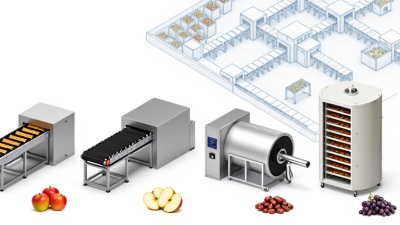
01 Commercial cabinet dehydrator supplier Enclosed cabinet units with multiple removable trays and controlled heated-air circulation. Small food processors, farms, and commercial kitchens seeking batch processing. Confirm usable tray area, loading method, temperature-control range, and cleaning access.
02 Industrial tray-dryer supplier Larger batch dryers designed to process food on trays or wheeled racks. Food manufacturers needing repeatable batch drying and higher loading capacity. Request a product-specific capacity estimate, airflow layout, cycle data, and installation requirements.
03 Continuous-belt dryer supplier Conveyor-based systems that move product through a controlled drying zone. Processors with steady production flows and products suitable for belt conveying. Check belt material, feed and discharge arrangements, line integration, and cleaning procedures.
04 Heat-pump dehydrator supplier Drying systems that use a heat-pump cycle to manage heat and moisture removal. Buyers evaluating controlled drying conditions or energy use for their specific process. Compare energy figures under the same test conditions and verify performance with the intended product.
05 Convection dehydrator supplier Equipment that circulates heated air across trays or product surfaces. Businesses drying sliced fruit, vegetables, herbs, or other suitable foods in batches. Ask about airflow uniformity, tray spacing, loading limits, and temperature measurement points.
06 Freeze-drying equipment supplier Vacuum freeze-drying systems that remove ice from frozen product by sublimation. Specialty food producers seeking freeze-dried product characteristics. Review chamber and condenser specifications, vacuum-system requirements, cycle validation, and service support.
07 Herb and botanical dryer supplier Low-temperature drying equipment configured for delicate leaves, herbs, or botanical materials. Herb processors and growers who need controlled handling of lightweight products. Verify temperature control, gentle airflow, tray or screen options, and material compatibility.
08 Custom OEM dehydrator supplier Built-to-order machines or assemblies produced to a buyer’s drawings or technical brief. Importers, equipment integrators, and businesses requiring customized dimensions or controls. Agree on drawings, acceptance tests, change control, spare parts, and responsibility for compliance documentation.
09 Modular drying-line supplier Expandable drying systems combining preparation, drying, conveying, and related process equipment. Processors planning a coordinated line or anticipating future capacity changes. Confirm interface details, utilities, line layout, commissioning scope, and performance responsibilities.
10 Compact and pilot-scale dryer supplier Small-capacity equipment for product development, trials, or limited production batches. Research kitchens, product developers, and businesses validating recipes before scale-up. Check whether trial results can be scaled, and document load size, product preparation, and drying conditions.

These are anonymized supplier categories, not named or independently verified companies. Machine configurations and performance vary by model; buyers should confirm specifications, food-contact materials, applicable certifications, and test results directly with each supplier.

Comparing Supplier Products, Capabilities, and Certifications

Top 10 Food Dehydrator Machine Suppliers for Global Buyers

Comparing Supplier Products, Capabilities, and Certifications

Choosing a food dehydrator supplier involves more than comparing tray counts and listed prices. Check the temperature range, airflow design, usable drying area, and materials that contact food. Ask how the machine performs with different loads, such as sliced apples on several trays. A polished specification sheet helps, but it cannot show every production detail. That gap deserves attention.

Compare suppliers’ manufacturing capacity, customization options, spare-parts availability, and technical support. Request clear information about lead times, installation guidance, and maintenance needs. Certifications can offer useful evidence, but verify their scope, issuing body, and current status rather than relying on a logo alone. Requirements may vary by destination and equipment type. Details matter. A supplier’s response to specific questions can also reveal how well it understands its own products.

Tips: Ask for a sample test using your ingredients and target moisture level. Request operating instructions and cleaning guidance before ordering. Compare warranty terms in writing, and confirm which components are covered. One overlooked point is local service access; plan for it early.

Key Considerations for International Sourcing and Purchasing

For international buyers, compare food dehydrator suppliers by measurable operating performance, not quoted tray capacity alone. The FAO’s 2019 State of Food and Agriculture estimated that 14% of food was lost between harvest and retail in 2016. Consistent drying can help preserve produce, but results depend on airflow, temperature control, and the product’s moisture level. Ask suppliers for test records using your actual material, tray loading, and target moisture content. A shiny sample is not enough.

Check energy use per kilogram, temperature uniformity across loaded trays, food-contact material declarations, and cleaning access. Request wiring diagrams, spare-parts lists, and clear warranty terms before payment. World Bank’s 2023 Logistics Performance Index covers 139 economies and evaluates factors including shipment timeliness and logistics reliability. Those details matter when machines cross borders. Confirm packed dimensions, shipping weight, installation support, and who handles export documents. Small omissions can delay commissioning. They often do.

Finally, test whether the supplier can maintain consistent results across production batches, not just during a demonstration. Video calls can show the factory, but they cannot replace inspection or a documented acceptance test. I would treat unusually high capacity claims cautiously; actual output changes with slice thickness, humidity, and loading. A lower purchase price may still mean higher energy or service costs. The comparison is rarely perfect. Keep written records of every specification and agreed test condition.