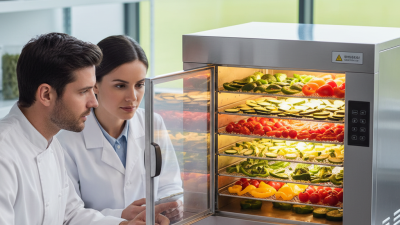
7 Best Vegetable Air Dryers for Commercial Use?
Commercial vegetable processing faces a costly challenge: moisture must be reduced without damaging color, texture, flavor, or food safety. The FAO’s The State of Food and Agriculture 2023 reports that 13.2% of food was lost globally between harvest and wholesale in 2021. Vegetables are especially vulnerable because their high moisture content encourages bruising, decay, and microbial growth. A properly selected Vegetable Air Dryer can help processors improve handling efficiency and reduce avoidable losses.
This guide examines seven commercial models through practical criteria. These include airflow consistency, drying capacity, temperature control, belt or tray design, cleaning access, energy use, and maintenance requirements. The review also considers whether each machine supports repeatable results across leafy greens, sliced roots, herbs, and mixed vegetables. The U.S. Department of Agriculture emphasizes process control and sanitation throughout food handling. Therefore, drying performance cannot be judged by speed alone. Cleanability matters.
Real production conditions can be messy. A machine may perform well with lettuce but struggle with dense carrot slices. A large chamber may also waste energy during smaller batches. No ranking is perfect. Operator skill, incoming moisture, cutting thickness, and room humidity can change results. The UNEP Food Waste Index Report 2024 estimates that 1.05 billion tonnes of food were wasted in 2022, showing why practical loss reduction deserves attention. The following comparison focuses on dependable commercial use, not attractive specifications alone. Readers should verify capacity claims with demonstrations, sample testing, and service records before purchasing. That extra step may prevent an expensive mistake.
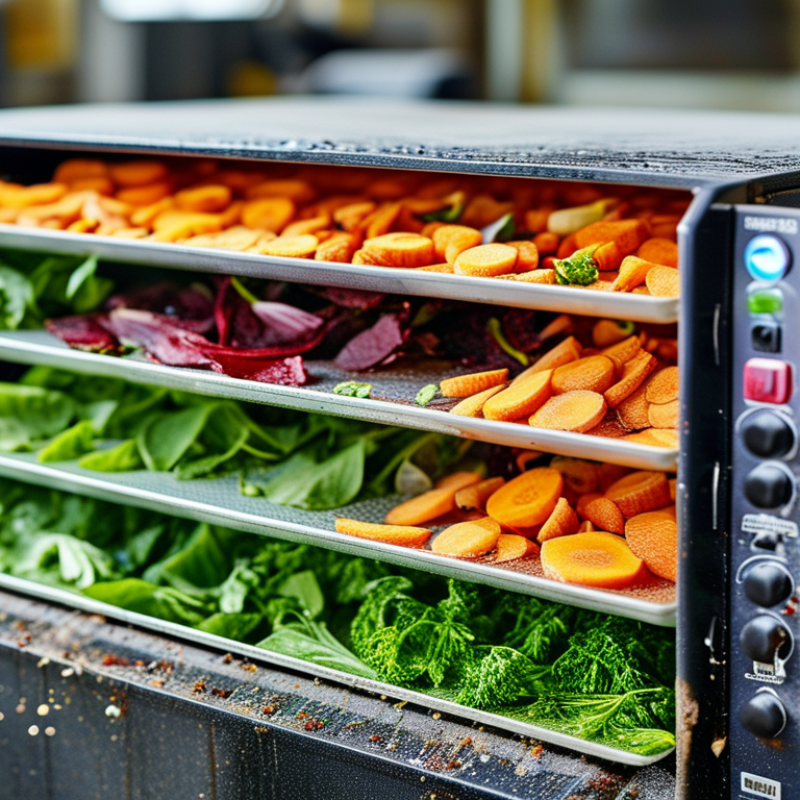
What Defines a Commercial Vegetable Air Dryer?
What Defines a Commercial Vegetable Air Dryer?
A commercial vegetable air dryer removes surface water after washing, cutting, or blanching. It is not simply a larger household machine. The real definition combines throughput, drying consistency, hygiene, energy control, and repeatable operation. FAO’s The State of Food and Agriculture 2019 estimates that 14% of food is lost between harvest and retail. Better surface drying can help reduce handling losses, especially in leafy vegetables and cut produce.
Capacity comes first. A suitable unit should process the required kilograms per hour without crushing delicate leaves. Adjustable air velocity matters. Too little airflow leaves wet pockets, while excessive airflow can damage texture.
Sanitary construction is essential, with smooth contact surfaces, accessible inspection points, and limited water traps. The FDA Food Code 2022 also emphasizes cleanable equipment and contamination control. These requirements should influence the design, not appear as an afterthought.
Energy performance deserves equal attention. The dryer should display airflow, temperature, operating time, and fault conditions. Data logging helps operators compare batches and identify weak performance.
A higher airflow number is not automatically better. UNEP’s Food Waste Index Report 2024 estimates that 1.05 billion tonnes of food were wasted in 2022, but drying equipment cannot solve every loss.
Product loading, washing quality, and staff training still matter. In practice, the best commercial dryer is the one that delivers stable results during the busiest shift, not merely the one with the largest motor. I would still question any specification without tested moisture results.
Key Features for Efficient Vegetable Drying
Commercial vegetable drying depends less on speed than on controlled moisture removal. FAO’s 2019 State of Food and Agriculture report estimates that 14% of food is lost between harvest and retail. A well-selected air dryer can reduce handling losses, but airflow, temperature, and loading depth must work together. Look for variable-speed fans, adjustable air knives, and even airflow across every tray or belt. Stainless steel contact surfaces support sanitation and resist corrosion. Insulated chambers reduce heat escape and stabilize operating conditions. In practice, measure vegetable thickness, inlet temperature, outlet humidity, and final water activity. Guessing is expensive.
The most useful control is water activity, not surface dryness. FDA guidance identifies water activity as a key factor in controlling microbial growth, while USDA food-safety guidance emphasizes validated processing conditions. Choose sensors with calibration records, alarms, data logging, and an emergency stop. Removable trays, rounded corners, and accessible ducts can shorten cleaning time. Energy performance deserves equal attention. The International Energy Agency reports that industry remains a major global energy user, making efficient motors and heat recovery financially relevant. Do not overtrust catalogue capacity. Wet leafy greens and dense root slices behave differently. Pilot testing with your own cut size is wiser, even when it exposes inconvenient limits. That evidence matters.
7 Best Vegetable Air Dryers for Commercial Use
Typical operating-air temperature ranges for efficient commercial vegetable drying
Lower-temperature systems generally provide better color and nutrient retention, while higher-temperature systems can deliver faster throughput. Actual settings depend on vegetable type, slice thickness, loading density, target moisture content, and airflow. The ranges shown represent common commercial operating conditions rather than brand-specific specifications.
Seven Top Vegetable Air Dryers for Commercial Operations
Seven Top Vegetable Air Dryers for Commercial Operations
The seven strongest commercial options are cabinet, tray, tunnel, continuous belt, fluidized-bed, rotary, and heat-pump air dryers. Each suits different vegetables, moisture levels, and production volumes. Cabinet and tray systems offer careful batch control for sliced carrots, mushrooms, and herbs. Tunnel and belt dryers support larger throughput, but uneven loading can create wet centers and brittle edges. Fluidized-bed units work well with small pieces, while rotary systems handle robust, irregular vegetables. Heat-pump dryers can reduce heat loss, although their purchase cost may challenge smaller processors.
Food loss makes drying commercially important. The FAO reported that 14% of food is lost between harvest and retail. The UNEP Food Waste Index Report 2024 estimated 1.05 billion tonnes of food waste in 2022. Proper drying cannot solve every loss point, but it can extend vegetable usability when processing happens quickly.
Operators should record inlet temperature, airflow, drying time, final moisture, and water activity. Many shelf-stable products target water activity at or below 0.60, yet each recipe needs validation.
Cleanability matters as much as capacity. Look for stainless contact surfaces, removable trays, filtered intake air, and simple drainage.
I would not call one dryer universally best. A modest cabinet dryer may outperform a larger tunnel unit when labor, loading, and maintenance are limited. That judgment is easy to overlook.
Test three loads, not one, before purchasing.
How to Compare Capacity, Performance, and Operating Costs
Choosing among seven commercial vegetable air dryers starts with usable capacity, not advertised volume. Measure fresh produce weight per batch and basket clearance. A unit rated for 20 kilograms may handle less after washing and cutting. Leave airflow space between sliced carrots, greens, and peppers. Crowding extends drying time. I have found that removable racks improve loading consistency, though cleaning them takes longer. That trade-off matters in a busy preparation room.
Compare performance through moisture results, cycle time, and temperature control. Request test data using vegetables you actually process. Leafy greens may finish quickly, while thick beet slices need steady heat for hours. Look for even airflow across every rack, not just the center. A basic moisture meter can reveal uneven batches. It is not perfect. Visual inspection alone often misses soft centers. Record starting weight, final weight, energy use, and drying time for three trials.
Operating cost includes electricity, labor, maintenance, and rejected product. Estimate energy from wattage, cycle length, and your local utility rate. A faster dryer may consume more power but reduce staff handling. A smaller model can appear cheaper, yet repeated batches may sharply increase labor costs. Check filter replacement, fan access, insulation, and warranty terms. Some calculations will be messy. Recheck them during peak production, when loading errors and longer cooling times reveal the real cost.