An Airconditioner Inverter is more than a modern label on a wall-mounted cooling unit. It describes a variable-speed compressor that adjusts its output instead of repeatedly switching fully on and off. This small mechanical decision changes how a room feels, sounds, and consumes electricity. The compressor may slow during a quiet afternoon, then respond quickly when sunlight heats the windows.
The International Energy Agency reports that air conditioners and electric fans account for nearly 10% of global electricity consumption. Its The Future of Cooling report also projects global cooling demand to grow sharply as incomes rise and temperatures increase. These figures explain why inverter technology attracts attention from engineers, building owners, and energy policymakers. The U.S. Department of Energy identifies variable-speed operation as an important path toward improved seasonal efficiency, especially when equipment is correctly sized and installed.
But efficiency claims are not universal. Poor maintenance, blocked filters, low refrigerant charge, or an oversized system can weaken the expected benefits. Real homes rarely match laboratory conditions. That matters. A reliable explanation must examine compressor control, seasonal efficiency ratings, humidity removal, sound levels, installation quality, and long-term operating costs. The Airconditioner Inverter can reduce temperature swings and startup stress, yet it does not make electricity use disappear. IEA analysis gives the global perspective, while testing standards and field experience reveal the practical details. This article explores how the technology works, where it performs best, and why a careful comparison remains necessary before purchase.
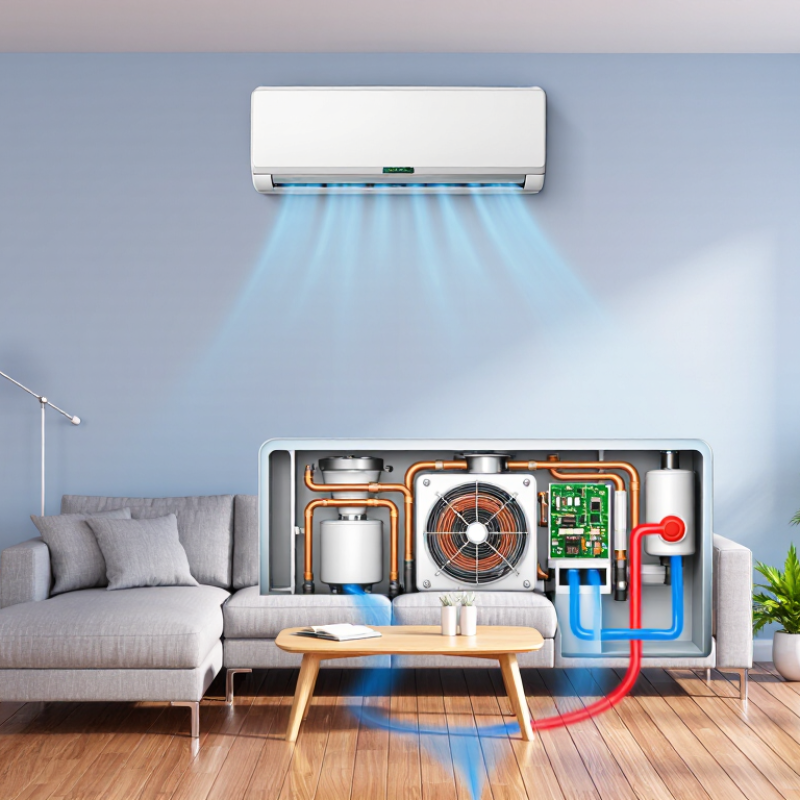
An air conditioner inverter is a control system that adjusts compressor speed. It does not simply switch the compressor on and off. Instead, it raises or lowers output according to the room’s cooling demand. During a hot afternoon, the compressor may run faster. After the room reaches the selected temperature, it slows down. This process can reduce temperature swings, operating noise, and unnecessary energy use. In practical use, the room often feels steadier, rather than suddenly cold and warm.
The technology needs correct installation and suitable sizing. A unit that is too large may cool quickly but cycle poorly. A small unit may run continuously and struggle on humid days. I once assumed a lower thermostat setting would cool a room faster. It mainly made the system work harder. That was a useful correction. Energy performance also depends on insulation, filter cleanliness, outdoor temperature, and user habits. Inverter operation is efficient, but it is not magic.
Tips: Keep doors and windows closed while cooling. Clean or replace filters as recommended. Set a moderate temperature instead of choosing the lowest setting. Listen for unusual vibration or repeated speed changes. Ask a qualified technician to check refrigerant, wiring, and airflow. A professional inspection is especially important when cooling weakens, moisture appears indoors, or electricity use rises unexpectedly.
What Is an Air Conditioner Inverter?
How Inverter Technology Controls Compressor Speed
An air conditioner inverter is an electronic control system that adjusts compressor speed. A conventional unit usually switches the compressor fully on or off. An inverter changes its speed according to the room’s cooling demand.
A temperature sensor measures indoor conditions several times during operation. When the room feels hot, the inverter increases compressor speed and moves more refrigerant through the system. As the target temperature approaches, it slows the compressor instead of stopping suddenly. This steady adjustment can reduce temperature swings, startup noise, and repeated electrical surges.
The process uses a variable-frequency drive. It converts incoming electricity and carefully controls the frequency sent to the compressor motor. Higher frequency generally means faster rotation, while lower frequency produces gentler cooling. The compressor may run quietly at a low speed beside a desk, then work harder after sunlight heats the room.
It is not magic.
Actual efficiency depends on insulation, outdoor temperature, filter cleanliness, and correct sizing. A poorly sized inverter system may still cycle awkwardly. During practical maintenance, technicians should check airflow, sensor accuracy, refrigerant conditions, and electrical connections. One detail is easy to overlook: slower operation does not always mean weaker performance. It often means the system is matching demand more precisely, although real savings vary between buildings and usage habits.
| Data Dimension | Inverter Air Conditioner | Fixed-Speed Air Conditioner | Why It Matters |
|---|---|---|---|
| Basic definition | Uses electronic power control to vary the compressor motor speed. | Uses a compressor that normally operates at one designed speed. | The inverter can adjust cooling or heating output instead of relying mainly on repeated starts and stops. |
| Main control component | A variable-frequency drive changes the electrical frequency and voltage supplied to the compressor motor. | A relay or contactor switches the compressor on or off at a substantially fixed electrical frequency. | Motor speed is linked to the frequency of the supplied electrical power. |
| Compressor operation | Continuously modulates within a permitted operating range, often slowing after the target temperature is approached. | Runs near full capacity when switched on and stops when the thermostat is satisfied. | Modulation can provide closer temperature control and reduce large output swings. |
| Typical capacity control | Many systems can operate from a reduced load up to their rated capacity; the exact minimum and maximum depend on the model. | Usually provides two basic states: off or close to rated capacity. | Variable capacity helps match the compressor output to the current heat load. |
| Starting current | Generally lower than a direct fixed-speed start because the drive can ramp the motor speed up gradually. | Often has a higher brief inrush current when the motor starts directly across the supply. | A softer start can reduce electrical and mechanical stress, although the actual current depends on the equipment. |
| Temperature stability | Typically maintains a steadier indoor temperature by making smaller output adjustments. | May produce wider temperature fluctuations because the compressor cycles on and off. | Stable operation can improve comfort, especially during long periods of partial load. |
| Energy use at partial load | Can be more efficient because the compressor slows down rather than repeatedly restarting at full output. | May use more energy during frequent cycling, including repeated start-up and shut-down periods. | Efficiency benefits depend on correct sizing, outdoor temperature, indoor load, controls, and maintenance. |
| Noise profile | Often quieter during steady operation because the compressor and outdoor fan can run at reduced speeds. | Sound level can change more noticeably when the compressor starts and stops. | Perceived noise is also affected by fan settings, mounting, airflow, and building structure. |
| Humidity control | May provide better control when the system and controls are designed to run for longer, lower-capacity cycles. | Long off-cycles can reduce dehumidification after the indoor coil warms up. | Actual humidity performance depends on coil temperature, airflow, runtime, and the control strategy. |
| System complexity | Higher, because it includes power electronics, sensors, control software, and a variable-speed motor. | Generally simpler control and electrical architecture. | Inverter systems may require technicians with appropriate electrical and electronic diagnostic skills. |
| Best operating condition | Long operating periods and varying cooling or heating loads where the system can modulate continuously. | Applications with simple controls, short operating periods, or situations where lower initial complexity is important. | Correct equipment sizing and installation are essential for either technology. |
What Is an Air Conditioner Inverter?
An inverter air conditioner regulates temperature by changing the compressor’s speed. A conventional system often switches fully on and off. An inverter system adjusts its output more gradually. When a room is hot, the compressor runs faster and removes heat quickly. As the target temperature approaches, it slows down. This process helps maintain a steadier indoor climate.
Temperature sensors continuously measure room conditions and compare them with the selected setting. The control board then changes the compressor frequency. For example, a room set to 24°C may not remain exactly at 24°C. Small changes occur because sunlight, open doors, people, and appliances add heat. The inverter responds to these changes instead of waiting for a large temperature difference.
The result can be quieter operation and lower electricity use during long running periods. It may also reduce the uncomfortable cold bursts caused by repeated full-power cycling. This is not magic. Poor insulation, blocked filters, or incorrect sizing can reduce the benefit. A practical check is simple: observe whether the room stays comfortable without frequent, noticeable temperature swings. Humidity control can be less predictable, especially when the compressor slows too much. That detail deserves attention. No control system is perfect, and user settings still influence performance. A slightly higher temperature setting, clean airflow path, and properly sealed room often support more stable regulation.
An inverter air conditioner continuously varies compressor output to match the cooling demand. In this illustrative eight-hour operating profile, the indoor temperature remains close to the 24°C setpoint while compressor output rises during warmer periods and decreases after the target temperature is reached.
An inverter air conditioner uses electronics to vary compressor speed. It does not simply switch the compressor on and off. When a room approaches its set temperature, the compressor slows down. This can reduce temperature swings, starting noise, and repeated high-power starts. A non-inverter unit usually runs at one fixed capacity. It cools hard, stops, then restarts when the room warms.
The difference matters because cooling demand changes throughout the day. Sunlight, occupancy, humidity, and open doors constantly alter the load. The International Energy Agency reported that air conditioners consumed about 2,000 TWh globally in 2016. Its Future of Cooling analysis projects roughly 6,200 TWh by 2050 without stronger efficiency improvements. Small operating gains therefore matter at scale. During long, steady operation, an inverter can use less electricity than repeated full-power cycling.
However, inverter does not automatically mean lower bills. An oversized system, dirty filter, or poor airflow can reduce its real-world advantage. The U.S. Department of Energy emphasizes correct sizing, maintenance, and airflow for efficient HVAC performance. Non-inverter systems remain simpler and may suit rooms used occasionally. They can also produce louder starts and less stable comfort. The comparison is not perfectly simple. Installation quality matters more than many buyers expect.
An inverter air conditioner adjusts compressor speed instead of switching fully on and off. This allows steadier indoor temperatures. In daily use, the room feels less uneven, with fewer sudden blasts of cold air. The system may also reduce electricity use during long operating periods. Actual savings depend on insulation, outdoor temperature, room size, and thermostat settings.
Comfort improves quietly. A bedroom can remain near its chosen temperature without repeated compressor noise. Inverter systems can also reach the target temperature quickly, then operate gently. From practical installation experience, correct sizing matters greatly. An oversized unit may cycle poorly, wasting part of the inverter’s advantage. Professional commissioning should check airflow, refrigerant charge, drainage, and electrical safety.
There are limitations. Purchase and repair costs can be higher because the control board and compressor electronics are more complex. Repairs require trained technicians and suitable testing equipment. Very short cooling sessions may provide fewer savings than expected. Dusty filters also reduce performance quickly. Maintenance is not optional.
Some users expect dramatic energy reductions. That expectation needs care. Weather, building leakage, and personal habits often matter more than the technology alone. A poorly sealed window can defeat efficient operation. Inverter controls can be reliable, but electronic parts remain sensitive to voltage problems and moisture. The decision is less simple than “inverter equals cheaper.”