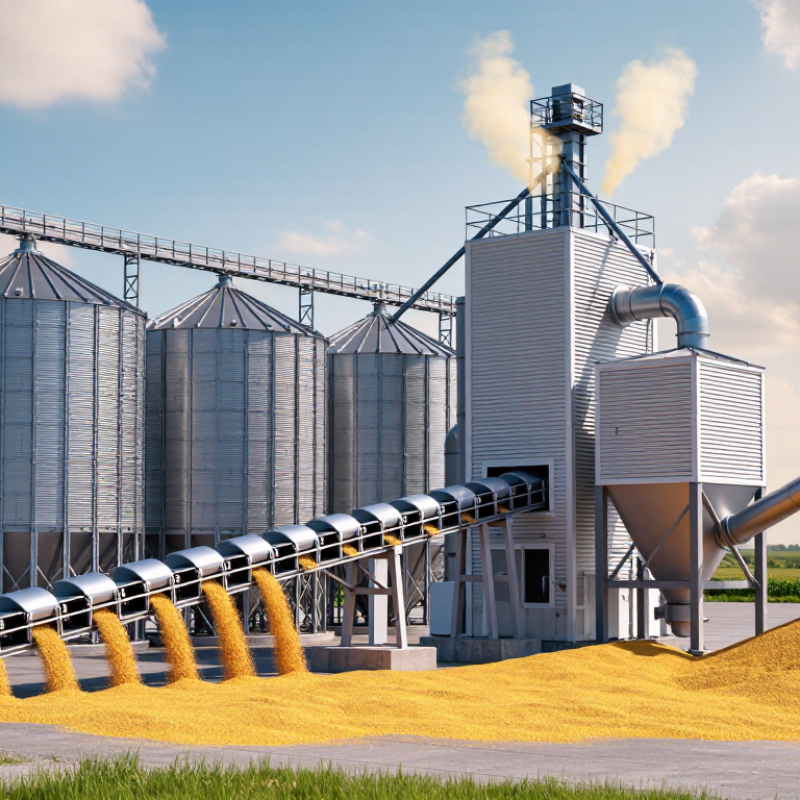
A Grain Dryer is more than a heated metal chamber beside a storage bin. It is a controlled system that removes excess moisture from harvested grain, helping protect quality during storage. Without proper drying, warm and damp kernels can encourage mold, insects, spoilage, and uneven grain condition.
Dr. Kenneth J. Hellevang, a respected grain-drying specialist and professor emeritus at North Dakota State University, explains: “The goal is to dry grain efficiently and maintain quality.” His point is practical. A dryer moves air through the grain while carefully managing temperature, airflow, and moisture removal. Heated air absorbs moisture from the kernels. Cooler air then helps stabilize the grain before storage. Some systems use continuous-flow operation, while others dry batches inside a drying bin.
The process sounds simple.
In reality, it requires judgment. Corn harvested on a cold, wet afternoon may need different settings than warm wheat gathered during a dry week. Operators must consider grain type, initial moisture, airflow rate, drying temperature, and the final moisture target. Sensors can improve consistency, but they cannot replace inspection. A sample may still reveal hot spots, cracked kernels, or uneven drying that equipment does not immediately show.
An efficient Grain Dryer saves more than time. It can reduce storage losses, preserve test weight, and support dependable marketing decisions. Yet faster drying is not always better. Excessive heat can damage germination, color, texture, or milling performance. This is where practical experience matters. The best results come from measured adjustments, regular monitoring, and a willingness to question automatic settings when real grain behaves differently.
What Is a Grain Dryer and How Does It Work?
Grain Dryer Basics: Removing 2–6 Percentage Points of Moisture Safely
A grain dryer uses controlled heat and airflow to remove excess water from harvested grain. Warm air passes through the grain bed. Moisture moves from the kernels into the air, then exits the drying chamber. The goal is not simply to make grain drier. It is to reduce moisture by 2–6 percentage points while protecting quality, weight, and storage life.
Small changes matter. Grain entering at 20% moisture may leave near 15% after a five-point reduction. Operators should measure moisture before, during, and after drying. A calibrated moisture meter helps, although readings can vary with grain temperature. Letting a sample cool before testing often gives a more dependable result.
Keep airflow steady. Avoid excessive heat.
Uneven grain flow can create wet pockets and overheated kernels. Regularly inspect discharge grain, listen for unusual fan sounds, and check for hot spots in the dryer or storage bin. Corn, wheat, and rice each respond differently to heat, so one temperature setting cannot suit every crop. Drying too quickly may cause stress cracks, while slow drying can waste energy and invite spoilage. A practical plan should allow adjustment. Perfect settings rarely survive changing weather, crop condition, and equipment loading. That is where careful records become valuable.
A grain dryer removes excess moisture so harvested grain can be stored more safely. Its performance depends on four connected systems: fans, heaters, drying chambers, and grainflow controls. Fans move air through the grain bed. Strong, even airflow prevents wet pockets from remaining near the chamber floor. Heaters raise the air temperature, but excessive heat can crack kernels or reduce quality. The correct setting depends on crop type, moisture level, and the intended use of the grain. In practical operation, workers should check temperature readings and use a calibrated moisture meter. A warm surface does not prove that the entire batch is dry.
The drying chamber holds the grain while heated air passes through it. Its shape and internal spacing affect airflow, residence time, and drying consistency.
Grainflow controls regulate how quickly grain enters, moves through, and leaves the chamber. If grain moves too quickly, moisture may remain trapped inside the kernels. If it moves too slowly, energy use rises and some grain may become overly dry.
Uneven flow is easy to miss.
Dust buildup, blocked screens, or inaccurate sensors can disturb the process. Operators should inspect these points before changing heater settings. I would not rely on one reading alone. Weather, crop condition, and loading depth can all shift dryer performance, sometimes more than expected.
A grain dryer removes water by moving heated air through a moving bed of grain. The air warms the kernels, lowers surface humidity, and carries moisture toward an exhaust outlet. In practical operation, one pass often removes about 0.5–2 percentage points of moisture. The exact result depends on airflow, grain depth, initial moisture, and air temperature. It is not a fixed promise.
Industry guidance supports careful control. The FAO Grain Storage and Drying guidance emphasizes uniform airflow and gradual moisture reduction to limit cracking. USDA grain-quality procedures also treat moisture as a measured factor, not a visual estimate. Operators typically check samples before and after drying. A handheld meter can help, but calibration matters. Small errors become expensive across a full bin.
Consider corn entering at 18% moisture. A 1.5-point reduction may bring it near 16.5% after one pass. Cooling and testing should follow before another pass. The kernel surface may feel dry while its center remains wetter. This is where rushed settings create trouble. ASABE moisture-equilibrium research shows that grain continues exchanging moisture with surrounding air after heating. Therefore, holding time and cooling are part of the process, not optional extras. Energy reports from the U.S. Department of Energy also identify drying as a significant grain-handling energy load, so excessive heat can waste fuel and reduce quality.
| Process Stage | What Happens | Typical Operating Data | Purpose and Practical Result |
|---|---|---|---|
| 1. Grain Intake | Freshly harvested grain enters the dryer with moisture that is usually above the level required for safe storage. | Common incoming moisture: 18–30% wet basis | Initial moisture measurement helps determine the required drying time, airflow, and number of passes. |
| 2. Pre-Cleaning | Dust, chaff, fines, and foreign material are removed before the grain reaches the drying chamber. | Improves airflow uniformity | Cleaner grain reduces blockages, improves heat transfer, and helps limit uneven drying. |
| 3. Air Heating | A burner or another heat source warms ambient air. The heated air is then directed through or across the grain. | Approx. 40–110°C air temperature, depending on crop and end use | Warmer air lowers relative humidity and increases the air's capacity to remove moisture from the grain surface. |
| 4. Airflow Through Grain | Fans move heated air through grain layers, columns, or moving grain streams. Air picks up moisture as it passes through. | Airflow must remain even across the grain bed | Uniform airflow helps prevent wet pockets, overdrying, and excessive grain temperature. |
| 5. Moisture Migration | Heat moves moisture from inside each kernel toward its surface, where the moisture evaporates into the moving air. | Drying rate depends on temperature, humidity, airflow, kernel size, and exposure time | The process removes water progressively rather than drying the entire kernel instantly. |
| 6. Moisture Removal per Pass | In a controlled pass, the grain is exposed to heated air and then moved onward or recirculated for another pass. | About 0.5–2 percentage points of moisture per pass | Multiple moderate reductions can provide better control than one aggressive drying cycle. |
| 7. Tempering or Equalization | Grain may rest after heating so moisture can redistribute from the kernel interior toward the outer layers. | Rest time varies with crop, moisture level, and equipment design | Tempering can improve moisture uniformity and reduce stress cracking, especially in cereal grains. |
| 8. Cooling | After drying, cooler ambient air is passed through the grain before storage or handling. | Grain is cooled close to storage conditions | Cooling lowers condensation risk and helps stabilize the grain before it enters a bin or silo. |
| 9. Final Moisture Check | A calibrated moisture meter is used to verify that the grain has reached its target moisture content. | Measurement should be taken from representative samples | Testing confirms whether additional drying is needed and helps prevent unnecessary energy use. |
| 10. Storage Target | The final target depends on the crop, storage duration, temperature, and market or processing requirements. | Corn commonly stored near 14–15%; wheat often near 13–14% | Lower moisture generally improves storage stability, but excessive drying can increase energy use and kernel damage. |
| Example Calculation | If grain enters at 22% moisture and loses 1.5 percentage points in one pass, its approximate moisture after that pass is 20.5%. | 22.0% − 1.5% = 20.5% | Further passes, tempering, cooling, and moisture checks may be required to reach the final storage target. |
A grain dryer is a controlled system that removes moisture from harvested grain. Fans push heated air through a perforated floor or drying column. The air absorbs water from the kernels and carries it away. Effective drying depends on temperature, airflow, exposure time, and grain depth.
Operating air temperatures commonly range from 40°C to 120°C. Lower settings suit delicate grain, seed, or high-quality food use. Higher settings can speed commercial drying, but they demand closer control. Grain temperature may remain below the incoming air temperature, yet it can rise during long exposure.
That difference matters. Excessive heat can cause cracking, discoloration, reduced germination, or uneven cooking quality.
Moisture levels between 10% and 20% require different decisions. Grain near 20% moisture usually needs stronger airflow and longer residence time. Grain near 10% may need gentle conditioning instead of aggressive heating. Operators should measure moisture at the inlet, outlet, and after cooling.
A single sample can mislead. I have found that uneven airflow is often overlooked; the top layer may stay damp while lower grain becomes too dry.
Regularly checking temperature, airflow, and kernel condition improves reliability. Still, no fixed setting works for every crop, climate, or dryer design. Trial records should be reviewed after each batch. That reflection can reveal small losses before they become expensive problems.
A grain dryer removes moisture by moving heated air through harvested grain. Fans push air across perforated floors or vertical columns. Heat increases evaporation, while airflow carries moisture away. Residence time determines whether kernels dry evenly or leave the dryer too wet.
Efficiency depends on balance. Excessive airflow may increase fan energy without improving drying. Too little airflow creates hot spots, uneven moisture, and longer residence time.
The U.S. Department of Agriculture’s Agricultural Marketing Service sets 15.5% maximum moisture for No. 2 yellow corn. However, long-term storage often needs lower moisture, depending on temperature, crop type, and storage duration. FAO grain-storage guidance commonly places safe cereal moisture near 13–14% under controlled conditions. These figures are not universal targets.
Small details matter.
Tips: Measure incoming moisture at several points, not only near the loading area. Adjust burner temperature gradually. Check exhaust humidity and grain temperature during operation. Clean screens and ducts, because restricted airflow wastes energy. A slower discharge rate can improve uniformity, but it may raise fuel use. I have found that the “fastest” setting is rarely the most efficient. Drying tests can also mislead when samples cool before moisture measurement. ASABE performance-testing guidance emphasizes representative sampling, airflow measurement, and moisture uniformity, not heat alone.